


College basketball is entering another period of confusion as a surprising new loophole allows players from the NBA’s G League to become eligible to play in the NCAA.
Once unthinkable under the strict amateurism rules, NIL and the transfer portal have paved the way for professionals to play collegiately now.
The House Settlement, which allows direct revenue sharing from schools to athletes, has also further blurred the lines between college and professional basketball.
This new trend is a direct result of the NCAA’s revised definition of amateurism, which has allowed athletes to gain more economic freedom.
Previously, the NCAA disqualified players with professional experience. Now, that barrier is beginning to fade, and it is happening in a particular way.
Players must have graduated from high school within the past five years and have not declared for the NBA Draft to become eligible.
In the past, any player who had signed a contract professionally would automatically be ineligible to play college basketball.
The previous definition of an amateur was that the player had not signed a professional contract or received any compensation, nor had they signed endorsement deals.
Since the introduction of NIL and direct revenue sharing, the rules have begun to shift, as colleges and professional sports seek a balance between the two.
The rule changed when the NCAA determined that a player who had not entered the NBA Draft and wasn’t making a salary covering “actual and necessary expenses” would be eligible to attend a university and make a better living at the collegiate level.
The G League Ignite has been a direct pathway for professionals to play in college.
The Ignite was not intended to leak into college sports, but was designed to offer top prospects a chance to earn money and play professionally before turning 19 and becoming draft-eligible.
Now, college coaches have taken advantage of the grey area in the rules, and several have used it to their advantage.
Former G League players, guards Thierry Darlan and London Johnson, are the most recent examples of the rule change.
Darlan had previously forfeited his college eligibility when he transitioned from the NBA Academy to the Ignite in 2023, according to CBS Sports.
With the new rules, Darlan is now enrolled in Santa Clara, and he is classified as a junior.
Johnson, his Ignite teammate, followed in his footsteps and recently played in the G League; he will now play for the University of Louisville.
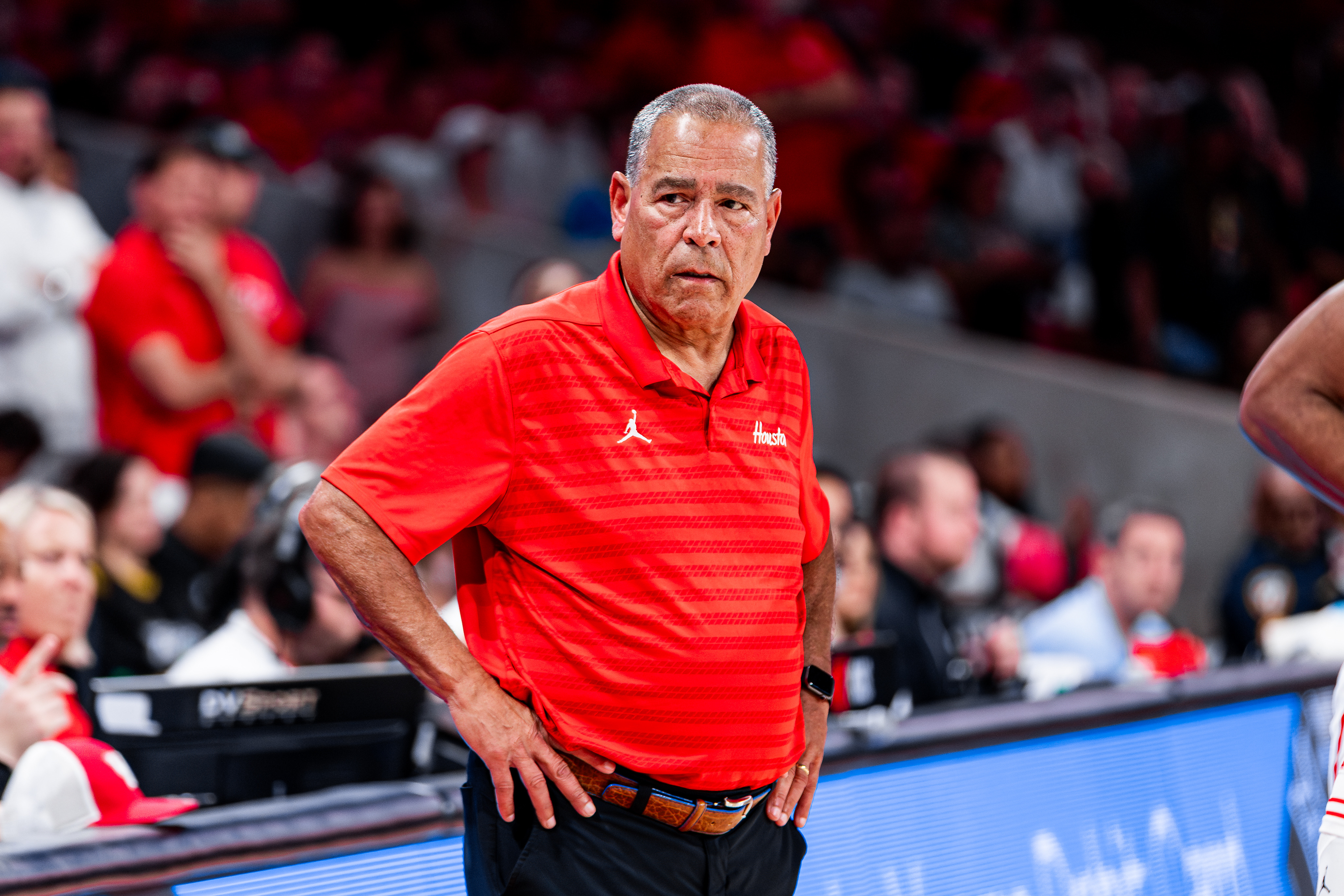
G League players now being eligible to return to college is a whole new ball game, and Houston’s coach, Kelvin Sampson, weighed in on the issue at the Big 12 Media Days.
“My good friend Tom Izzo said the other day that you can sign players from the G League,” Sampson said. “I realize I’m old and I’m out of step with most things, but I did not know about that rule. So I asked Kellen, my son, about it, and he said, ‘Yeah, we are recruiting somebody.’”
That somebody was former Westchester Knicks center Abdullah Ahmed, who spent his last two seasons in the G League and is a native of Egypt. On Nov. 11, Ahmed committed to play for the BYU Cougars over Houston. He is expected to play beginning in the 2026-27 season, but will join the program for the spring semester.
The NCAA’s September ruling will have further implications for basketball programs across the country, such as Houston.
The ability to recruit players with multiple years of professional experience could be an advantage for schools in a major conference or with more resources than other programs.
This issue could also further deter college coaches from recruiting high school players when they can utilize the transfer portal or recruit from the G League and have access to ready-made talent.
Purdue’s head coach, Matt Painter, wasn’t short on words when asked about the change.
“Everybody is a high school player at one time. There have to be opportunities for high school players,” Painter said. “Why are we taking away from high school players? The portal, all that stuff, takes away from the recruitment, especially Division II, low-major, mid-major recruitment. It just does.”
Painter’s concern demonstrates a growing problem across all of college basketball: that as rules loosen and rosters get older, high school athletes will find fewer open doors.
Between the transfer portal, NIL deals and now a new G League loophole, the competition for roster spots has never been tougher.
“They want to grow their program,” Painter said. “But do you want to do that with 19- and 20-year-olds or with 22- and 23-year-olds? Well, they’re going to go into the portal and get older players and keep doing it, whether they want to or not, because they want to keep their job.”
Michigan State coach Tom Izzo also weighed in, and rather than blaming the players or coaches, he pointed out that the rulemakers were the issue.
“I listen to people talk about how kids have changed. The kids aren’t the problem,” Izzo said. “We are the problem… the NCAA has got to regroup. I am not going to be mad at the players; I am going to be mad at the adults in the room. Don’t blame the players anymore, blame the adults.”
Izzo’s frustration shows an underlying truth: the NCAA’s rules have struggled to keep pace with the changing landscape of college basketball.
Once, the question was whether a player would skip college for the pros. Now, the question may be whether a professional can return to college.
For college coaches and G League players, why wouldn’t they take advantage of the opportunity if it is well within the NCAA’s rules?
Houston’s recruitment, along with other schools around the country, of G League players demonstrates how much the game has evolved over a relatively short period.
The issue is well-known, and it is up to the NCAA’s elite to address this problem and devise a solution going forward.
“Don’t blame the players anymore, blame the adults,” Izzo said.
Author

Discover more from Cougar Sports
Subscribe to get the latest posts sent to your email.